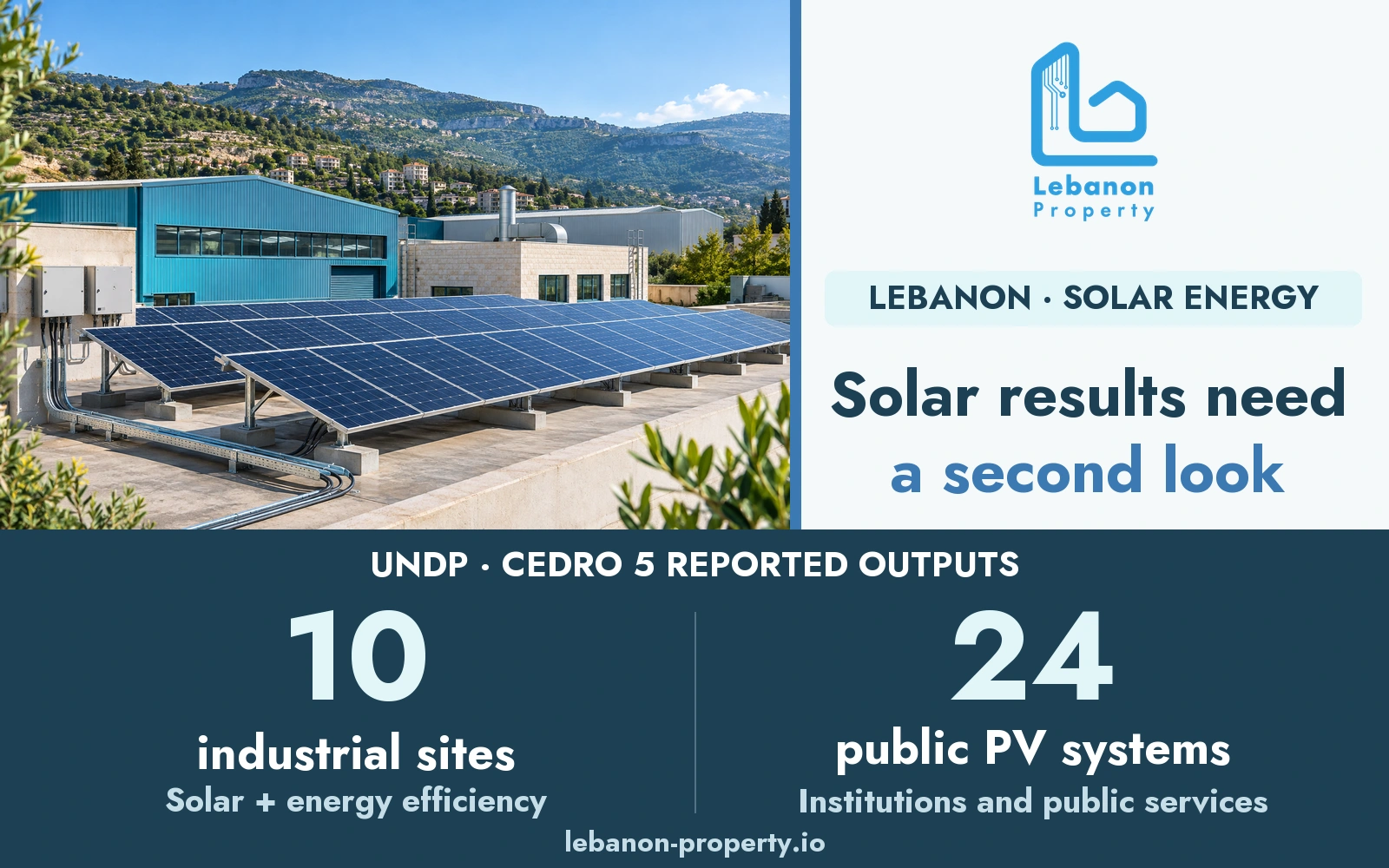
UNDP’s CEDRO 5 project page reports 10 industrial solar-and-efficiency sites and 24 photovoltaic systems delivered to public institutions. These are project outputs, not a national capacity total. The page lists a 2019–May 2026 duration while still displaying “Active”; this review does not infer an extension from that label.
Count installations, then ask what they delivered
For a factory manager or municipality, the useful next question is how each system performs against the building’s demand. A system count does not establish electricity produced, hours of backup or the reduction in a particular bill. Keep those outcomes in a separate evidence file.
Build a performance file
Ask the operator for dated meter readings, the system rating, maintenance records and the original comparison baseline. Record whether a quoted result concerns generation, on-site consumption or purchased electricity avoided. If the site’s production schedule changed, ask how the comparison accounts for it.
Look beyond the installation invoice
A practical procurement brief should name who monitors faults, maintains equipment and pays for replacement parts. It should specify what happens when output falls short and what records the owner can export. Comparing these responsibilities makes competing proposals easier to assess than comparing the panel count alone.
A useful local reference, with limits
CEDRO offers a documented Lebanese implementation reference. The public summary does not provide site-level tariffs, measured savings or a cost-per-installation breakdown suitable for copying into another project’s budget. Treat it as a starting point for requesting evidence, rather than a ready-made business case for every roof.
Prepared by Lebanon Property on 7 November 2026. Source dates and data periods are stated above. Practical implications are editorial analysis, not a valuation, individual legal or credit advice, or a guarantee of prices or returns.
Sources
- CEDRO 5: achievements and key figures
UNDP Lebanon · Accessed: 2026-11-07
Project duration stated 15 November 2019–15 May 2026 · Lebanese industrial and public-institution project outputs