Abu Dhabi’s housing pipeline: 2,545 delivered homes are not the same as 4,412 expected
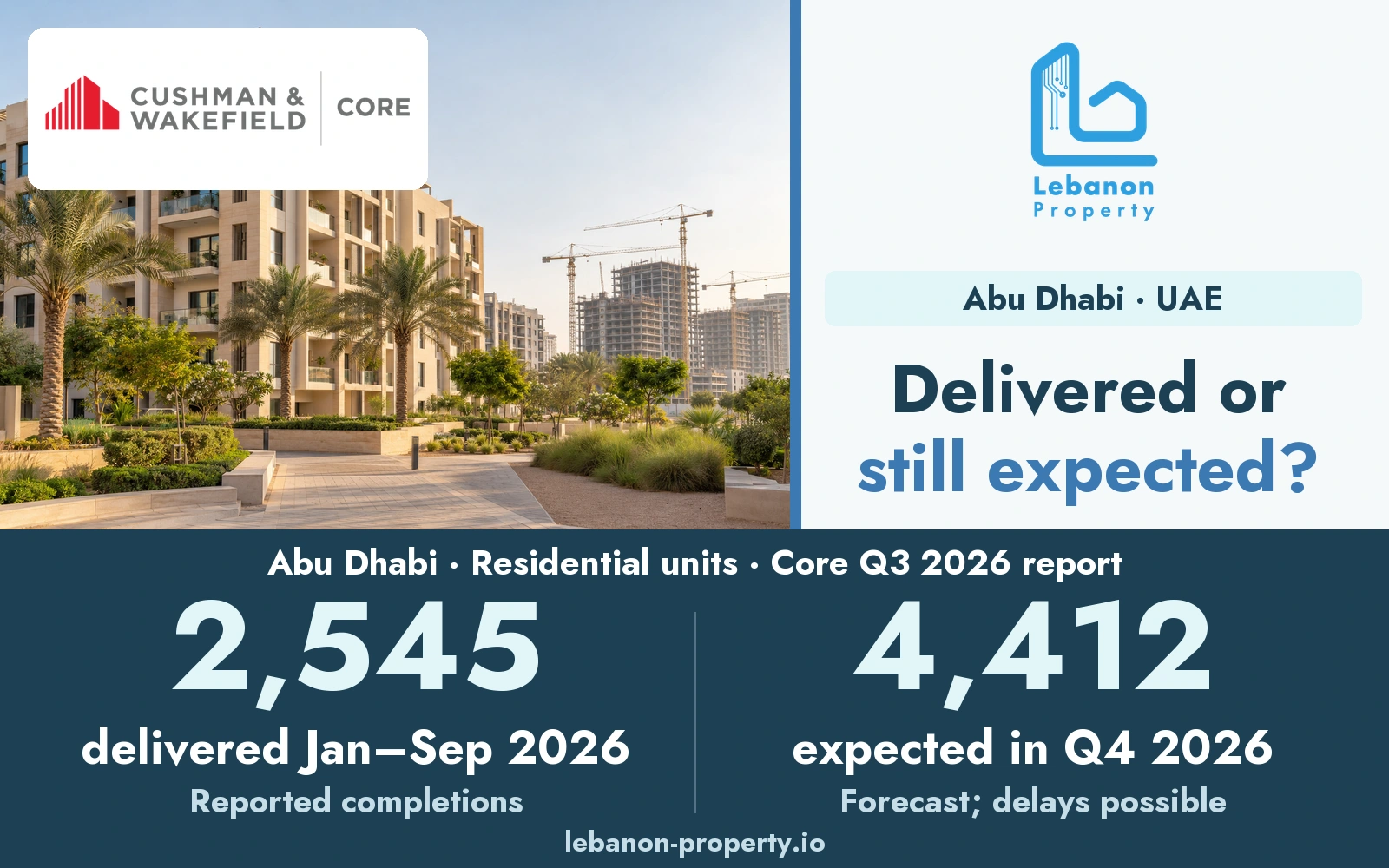
AI-generated illustration. Editorial visual of completed and developing apartment buildings in Abu Dhabi; not a photograph of a named project. The original research-company logo identifies the source.
Cushman & Wakefield Core separates completed homes from its year-end delivery forecast. Buyers and landlords should do the same when comparing supply.
The number that matters to someone moving home is not necessarily the number in a launch announcement. A completed property, a scheduled handover and a newly marketed project represent different stages of supply—and different risks for a buyer’s timetable.
What the report actually says
Cushman & Wakefield Core’s 30 October report records 2,545 residential units delivered in Abu Dhabi during January–September 2026 and expects another 4,412 in the fourth quarter, with possible slippage into 2027. These are the consultancy’s figures and forecast, not a UAE-wide total or a guarantee of keys by year-end.
Cushman & Wakefield Core · 2026-10-30
A buyer’s comparison should include time
When comparing a ready home with a future delivery, ask for evidence specific to the building and unit. A city-level pipeline cannot confirm that the lift works, the apartment is accessible or the handover documentation is complete. Those questions require direct checks.
Place the purchase timetable beside your own housing timetable. Consider the cost of extending an existing tenancy, moving twice or storing furniture if delivery shifts. Ask your adviser which contractual terms address delays; do not infer them from a brochure or market report.
For landlords, count competing usable homes
A larger pipeline can change the options available to future tenants, but timing and location matter. Homes delivered far away or in a different price segment may be weak substitutes for yours. The report’s delivered-versus-expected distinction is therefore a useful starting point, not a complete rental forecast.
- Track comparable completed units that can actually be viewed.
- Separate new listings from signed leases and record how long comparable homes remain available.
- Compare furnishing, maintenance, parking, access and recurring charges on a like-for-like basis.
- Keep a contingency for vacancy rather than assuming every scheduled unit arrives on time.
The next useful evidence
Watch for confirmed handovers and leasing activity in the area you are considering. If several comparable buildings become usable together, revisit the competition and pricing with current local evidence. If schedules move, update the forecast instead of continuing to count those homes as delivered.
This article uses the report to distinguish stages of supply. It does not adopt its price forecasts, establish a legal entitlement or promise a return from buying before a delivery wave.
Cushman & Wakefield Core · 2026-10-30
Explore more property coverage
Visit the Lebanon Property journal for more market news and practical property guides.
Prepared by Lebanon Property on 1 November 2026. Source dates and data periods are stated above. Practical implications are editorial analysis, not a valuation, individual legal or credit advice, or a guarantee of prices or returns.
Sources
- MarketBeat Residential Q3 2026 — Abu Dhabi, UAE
Cushman & Wakefield Core · Published: 2026-10-30 · Accessed: 2026-11-01
January–September delivered homes; Q4 2026 expected completions · Abu Dhabi residential supply according to consultancy research; not an official UAE-wide count
- Abu Dhabi Residential MarketBeat Q3 2026 — report PDF
Cushman & Wakefield Core · Published: 2026-10-30 · Accessed: 2026-11-01
Q3 report, delivered supply January–September and expected Q4 2026 · Abu Dhabi residential market research; forecast not guaranteed completion
That’s a wrap.
2 min well spent.
Useful? Send it to someone who’s house hunting.
Ready to see homes like these?
Browse verified listings, or ask our team anything on WhatsApp.